Bally Leather Flexing Tester
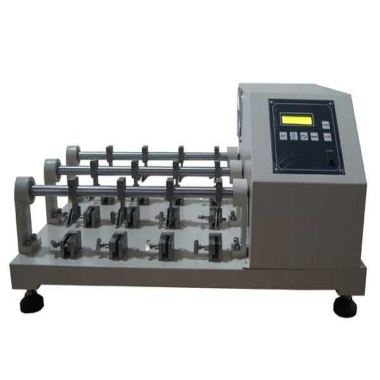


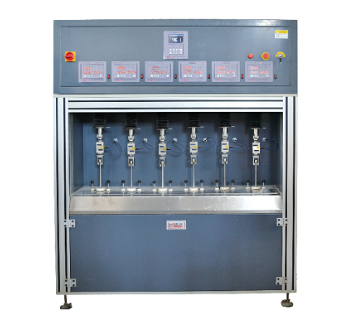
The Bally Leather Flexing Tester (also known as Flexometer) is designed to evaluate the flexural resistance and cracking tendency of leather and similar flexible materials under repeated bending conditions. The tester simulates the repeated creasing and flexing experienced by leather products during daily use, such as shoe uppers during walking. With a multi-station testing structure, automatic cycle control, and stable flexing movement, the instrument provides reliable evaluation of material durability and resistance to surface damage.
Applications
Testing the flexural resistance of leather, light leathers, and surface trims.
Assessing the propensity of materials to crack, simulating creases formed in shoe uppers during walking.
Complementary testing alongside shoe upper flex testers.
Pre-treatment of specimens prior to water vapor permeability testing, especially for protective footwear.
Standards
EN ISO 20344:6.6 — Personal Protective Equipment, Test Methods for Footwear
UNI 4818 — Polymeric materials, coated fabrics, Test Methods
DIN 53.351 — Inspection of leather, artificial leather, and similar flat fabrics
UNE/I.U.P. 20, I.U.P.10+20 — Leather testing methods
Technical Parameters
| Item | Specification |
|---|---|
| Flexing Angle | 22.5° |
| Speed | 100 ± 5 cpm |
| Instrument Material | Stainless steel |
| Surface Treatment | Paint spraying |
| External Dimensions (L×W×H) | 85.6 × 52 × 38 cm |
| Weight | 41 kg |
| Power Supply | AC 220V, 50Hz, 1A |
Features
Tabletop design, easy to plug in and use anytime.
12- or 24-station models, with selectable test stations for simultaneous testing of multiple samples.
High-automation control panel simplifies operation and monitoring.
Durable stainless steel construction with paint-sprayed surface for corrosion resistance.
Flexing mechanism specifically designed to complement shoe upper flex testers.
FAQ
(1)What is the purpose of the Bally Leather Flexing Tester?
The Bally Leather Flexing Tester is used to evaluate the ability of leather and similar materials to withstand repeated bending. It helps determine whether materials are likely to develop cracks, surface damage, or structural failure during actual use, especially in footwear and flexible leather products.
(2)What materials can be tested with this equipment?
This tester is suitable for natural leather, artificial leather, coated fabrics, surface trims, and other flexible materials. It is commonly used for evaluating shoe upper materials, protective footwear components, and leather products requiring repeated bending resistance.
(3)How does the flexing test simulate real applications?
The instrument applies repeated bending movements to the specimen at a controlled angle and speed. This process simulates the creasing and folding experienced by leather products during activities such as walking, helping evaluate long-term durability.
(4)How many samples can be tested at the same time?
The standard model provides 12 testing stations, while a 24-station configuration is also available. Multiple samples can be tested simultaneously under the same conditions, improving efficiency and ensuring comparison between different materials.
(5)Why is flex resistance testing important for leather products?
Leather products are frequently exposed to repeated bending during use. Flex resistance testing helps manufacturers select suitable materials, improve processing methods, reduce cracking problems, and ensure better product quality and service life.
Leave Message Get Price