Slip Resistance Tester
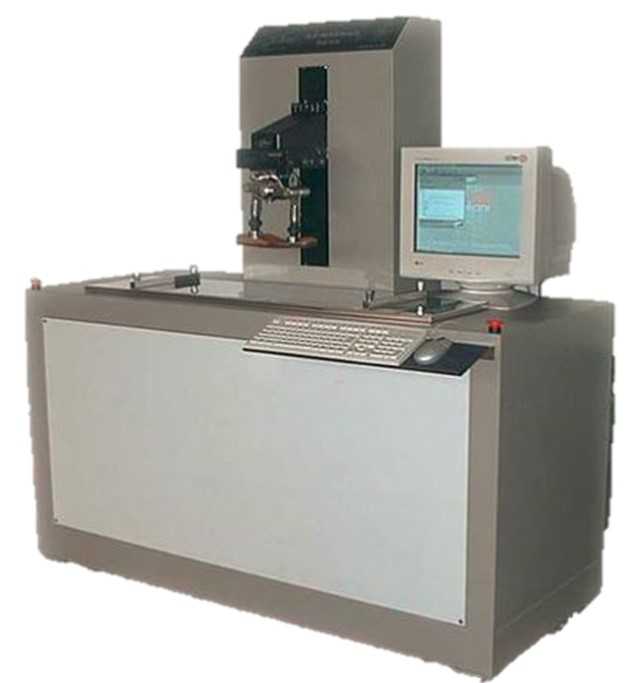


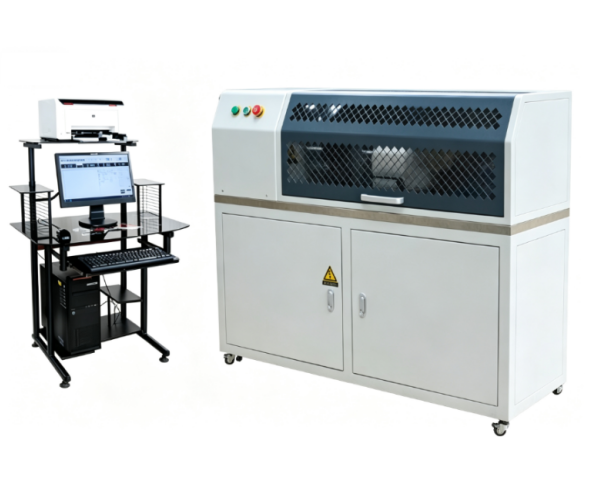
The Slip Resistance Tester is designed to evaluate the slip performance of footwear and floor surfaces by measuring friction characteristics under controlled test conditions. The instrument simulates real walking environments by applying a specified load, speed, and movement angle to determine friction parameters such as maximum friction, minimum friction, average friction, and coefficient of friction. It is widely used for evaluating the safety performance of safety footwear, sports shoes, flooring materials, and other anti-slip products.
Application
The unique design of the slip resistance tester can measure the slip resistance of the shoes with the standard ground, and measure the slip resistance of the floor material with the standard sole material. The fast and accurate control and data acquisition system ensure the force and speed requirements in the test process with the intuitive and convenient visual display results.
(1) Safety Footwear Testing
Used to evaluate the anti-slip performance of industrial safety shoes, protective footwear, and occupational shoes according to footwear safety requirements.
(2) Sports and Casual Footwear Evaluation
Suitable for testing running shoes, hiking shoes, outdoor footwear, and other products requiring improved grip performance.
(3) Floor Material Testing
Used to measure the friction performance of ceramic tiles, rubber flooring, PVC flooring, stone surfaces, and other floor materials with standard sole materials.
(4) Material Development and Quality Control
Helps manufacturers optimize outsole patterns, rubber formulations, and surface structures by comparing friction performance between different materials.
(5) Research and Safety Assessment
Applicable for laboratories conducting slip resistance studies related to workplace safety, public facilities, and consumer products.
Standards
1. ASTM F2913 standard test method for measuring the coefficient of friction for evaluation of slip performance of footwear and test surfaces/flooring using a whole shoe tester
2. BS EN 13287 Personal protective equipment. Footwear. Test method for slip resistance
3. GB/T 28287 Foot protection- Test method for footwear slip resistance
4. EN ISO 20344 Personal protective equipment - Test methods for footwear
5. Satra TM144 A New Method of Non - slip Test for Footwear
6. CEN/TC 161 WG3
Technical Parameters
| Items | Parameters |
| Angle of inclination | -40°- 40°(adjustable) |
| Load | Up to 600N |
| Torque speed | Up to 50N within 0.2s |
| Testing speed | 0.3m/s, other speed can be set |
| Time accuracy | 0.1s |
| Time display accuracy | 0.01s |
| Measurement parameters | Maximum friction, minimum friction, average friction, coefficient of friction |
| Power | 220V, 50Hz |
| Dimension | 1200 mm(W)×700mm(L)×1050mm (H) |
| Weight | 75kg |
Features
Fast fasten device can quickly install the sample and lock with the host. It simplify the sample installation process to avoid the differences test results and improve test experience and test results accuracy.
Real - time load acquisition system.
Support component and regulator indicator, real-time display test status.
Pneumatic lifting control system to meet the requirements of different thickness test specimens.
Irregular surface support tools to adapt the surface of the test material, providing the uniform load and the pilot force.
Adjustable test inclination to meet different test requirements.
Dial-type adjustment, convenient and quick. You can observe the tilt angle changes and adjust promptly in the test process.
Real-time analysis management software provides the visual display of maximum friction, minimum friction, the average friction.
Automatically calculate the friction coefficient.
Multi-Path output.
The software has Windows high compatibility features.
FAQ
(1) What materials can be tested with this instrument?
The tester is mainly used for footwear soles and floor materials. Typical samples include safety shoes, sports footwear, rubber soles, ceramic tiles, PVC flooring, and other surfaces where slip resistance performance needs to be evaluated.
(2) What test results can be obtained from the measurement?
The system provides key friction data including maximum friction, minimum friction, average friction, and coefficient of friction. These values help engineers compare material performance and assess whether products meet safety requirements.
(3) How does the test method simulate real slipping conditions?
The instrument controls load, movement speed, and inclination angle to reproduce contact conditions between footwear and walking surfaces. ASTM F2913 and EN ISO 20344 methods use friction measurement to evaluate slip performance.
(4) Why is the coefficient of friction important for footwear testing?
The coefficient of friction reflects the grip capability between the shoe sole and surface. A higher or more stable value generally indicates better resistance against slipping under specified test conditions, supporting footwear safety evaluation.
(5) How should laboratories select a suitable configuration?
Selection depends on the tested products, required standards, and test conditions. Laboratories should consider load range, surface fixtures, software functions, and applicable standards. Contact QINSUN engineers for suitable configuration recommendations.
Leave Message Get Price