JIS Rubbing Colour Fastness Tester
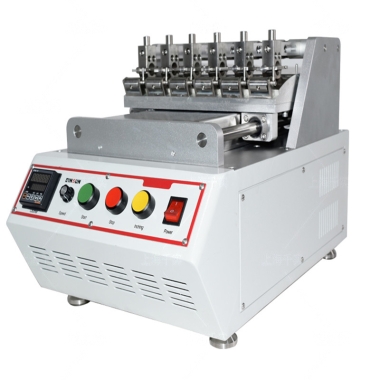


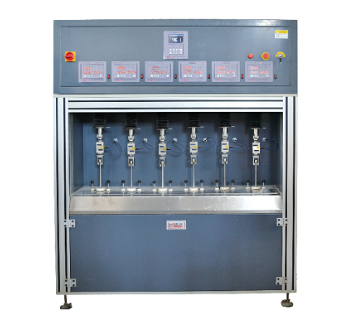
This rubbing color fastness tester is a standard testing machine of the Type II rubbing tester (GAKUSIN TYPE) specified in JIS L0849 Test Method of Rubbing Fastness in JIS Textile-Tests For Color Fastness. It is applied to determine the color resistance of dyed or printed textiles to rubbing thus providing evidence for textile products R&D and acceptance inspection. It is reported that this tester is stricter than the ordinary horizontal reciprocation rubbing color fastness tester whose evaluating results are worse with the same specimen tests. Textiles exported to Japan should present test results by this device. 50mm rub heads and auxiliary weights are equipped for cardboard rubbing resistance tests.
Features
1. By changing optional accessories, it is versatile for a variety of specimens tests such as flocking resistance test for flocking, color fastness for artificial leather, rubbing resistance for cardboard, fastness for printing ink and coating, etc.; horizontal reciprocation rubbing color fastness test can be carried out by changing the test bed.
2. Test cycles can be set (electronic), automatic counting; start buzzing after counting finished.
Standards
JIS L0849, JIS L1084, JIS L0862, JIS P8136, JIS L1084
Specifications
Model :238D
Stations :6
Rub heads:Curved surface R45mm, width 20mm
Rub heads load:2N
Rub area length:100mm
Reciprocal speed:30rpm
Load weight:300g,500g,800g
Rub cloth fixing method:Spring clip
Counter: 220V, 50Hz
Configurations
Base unit
G238D JIS rubbing color fastness tester
23803 Abradent fabric*1 box, 1000 pieces/box
Optional parts
238D1: Planar rub heads
238D2: Planar test bed
238D3: R50mm rub test (JIS P8136)
238D4: R1.5mm rub test(JIS P8136-flocking strength)
SZ320: #320abrasive paper
ZS: Grey scale (staining)-ISO/BS standard
23807: Grey scale (staining)-AATCC standard
Accessoriess
1. Flat test platform;
2. Transparent resin safety cover for high safety;
3. 1.5 R friction head (radius of curvature 1.5mm);
4. Sharp-angled friction head (for testing flocked products);
5. Load weights (300g, 500g, 800g);
6. Fixing device for thick test fabrics (maximum thickness 8mm);
7. Flat friction head (20×20mm, for testing printing inks and coatings).
Test Procedures
1. Pre-operation Preparation
First, adjust the working environment to meet JIS L0803 standard conditions: temperature 20±2℃ and relative humidity 65±3%. Acclimatize both the instrument and test samples in this environment for at least 4 hours. Then, cut textile samples into 150mm×50mm pieces (one piece per workstation), ensuring no wrinkles or defects. Finally, check the instrument: confirm it’s connected to the correct power supply (e.g., AC 220V/50Hz) and inspect rubbing heads and workstations for intactness.
2. Parameter Setting
Turn on the "Power" button on the control panel. Set test parameters according to relevant JIS standards (e.g., JIS L0849 or JIS K6328): adjust the pressure to 4.9N (the standard value for JIS tests), set the reciprocating speed to 30 cycles/min, and input the required rubbing cycles (e.g., 20 cycles for JIS K6328). Verify all parameters on the digital display to ensure accuracy.
3. Loading Samples & Crocking Cloth
For each workstation, fix the prepared sample flat on the test stage (use clamps to avoid displacement during testing). Attach a JIS L0805 standard white crocking cloth (50mm×50mm) to the bottom of each rubbing head, and secure it tightly with the clamping ring to prevent slipping during friction.
Initiate the TestAfter confirming all samples and components are properly installed, press the "Start" button to begin the test. Monitor the instrument’s operation throughout; if abnormalities occur (e.g., sample shifting, unusual noise), press the "Emergency Stop" button immediately. The instrument will stop automatically once it completes the preset rubbing cycles.
4. Post-test Handling
Press the "Stop" button, then carefully remove the crocking cloths and tested samples. Evaluate the results using the JIS L0805 grey scale: grade both the staining of the crocking cloth and the discoloration of the sample (on a scale of 1 to 5. where 5 indicates the best fastness). Record all test details (sample information, set parameters, and evaluated grades) in a test log for future reference.
5. Instrument Cleaning & Storage
Turn off the power and disconnect the instrument from the power supply. Wipe the sample stage, rubbing heads, and control panel with a dry, clean cloth to remove debris. Store unused standard crocking cloths in a dry, sealed container, and keep the instrument in a dust-free, dry environment when not in use.
FAQ
(1)What is a JIS Rubbing Colour Fastness Tester used for?
A JIS Rubbing Colour Fastness Tester is used to evaluate the resistance of textile colors to rubbing. It simulates friction by rubbing a fabric sample with a standard white cloth to measure color transfer. The tester is widely used in textile mills, garment factories, and laboratories for quality control.
(2)How is rubbing colour fastness tested?
A Rubbing Color Fastness Tester performs dry or wet rubbing tests by applying controlled friction between the textile sample and a standard rubbing cloth. After testing, the transferred color on the cloth is evaluated to determine the rubbing fastness grade.
(3)What is the difference between dry and wet rubbing fastness?
Dry rubbing fastness tests color transfer under dry conditions, while wet rubbing fastness uses a moistened rubbing cloth. Wet testing usually provides a more demanding evaluation because moisture can affect dye transfer performance.
(4)Which standards are used for rubbing colour fastness testing?
Common standards for rubbing color fastness include JIS L0849, ISO 105-X12, AATCC TM8, and GB/T 3920. The selected standard depends on the textile type, customer requirements, and target market.
(5)What materials can be tested with a Crocking Tester?
A Crocking Tester can test various dyed and printed textiles, including cotton, polyester, blended fabrics, denim, garments, and home textiles. It is used to evaluate resistance to color transfer caused by friction.
(6)What factors affect rubbing color fastness results?
Test results can be affected by fiber type, dye properties, fabric structure, finishing process, rubbing conditions, moisture level, and sample preparation. Consistent test conditions are important for reliable results.
Leave Message Get Price