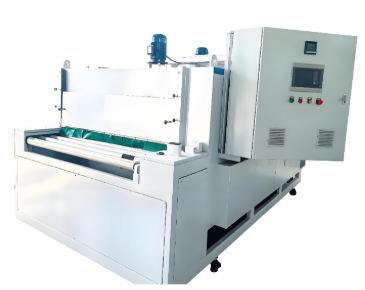
Laboratory Gas Fume Chamber



The Laboratory Gas Fume Chamber is designed to evaluate the colorfastness of textiles exposed to nitrogen oxides produced by gas combustion. During testing, textile specimens and control fabrics are exposed simultaneously to combustion gases until the control fabric reaches a specified color change. The discoloration of the test specimens is then assessed using a standard grey scale.
The chamber features a rotary specimen holder, PLC control, temperature monitoring, and an exhaust system. It supports repeatable testing of textile colorfastness to burnt gas fumes and is suitable for textile manufacturers, dyeing and finishing facilities, and quality inspection laboratories.
Application
(1) Woven fabrics
(2) Knitted fabrics
(3) Dyed and finished textiles
(4) Apparel fabrics
(5) Upholstery and furnishing textiles
(6) Colorfastness evaluation after exposure to burnt gas fumes
(7) Textile dye and finishing research
(8) Textile quality control laboratories
Standards
(1) ISO 105-G02:1993 — Textiles — Tests for Colour Fastness — Part G02: Colour Fastness to Burnt-Gas Fumes
(2) AATCC TM23-2015e(2020) — Test Method for Colorfastness to Burnt Gas Fumes
(3) BS EN ISO 105-G02:1997 — Textiles — Tests for Colour Fastness — Part G02: Colour Fastness to Burnt-Gas Fumes
(4) GB/T 11039.2-2005 — Textiles — Tests for Colour Fastness — Colour Fastness to Contaminants — Part 2: Burnt-Gas Fumes
Parameters
| Parameter | Specification |
|---|---|
| Rotation Speed | Approximately 2 rpm |
| Test Chamber Material | Stainless steel (SUS) |
| Specimen Size | 100 × 40 mm |
| Test Temperature | ≤60°C |
| Control System | PLC |
| Combustion Gas | Chemically pure butane or town gas |
| Dimensions (W × D × H) | 620 × 700 × 820 mm |
| Net Weight | 75 kg |
| Power Supply | AC 220 V, 50 Hz, 3 A |
Features
(1) Rotary specimen holder for simultaneous exposure of test and control fabrics.
(2) Automatic temperature monitoring and control.
(3) PLC-controlled operation.
(4) Adjustable test temperature and exposure time.
(5) Built-in observation window for monitoring specimen discoloration.
(6) Integrated combustion chamber and gas supply control.
(7) Exhaust system for removing combustion gases.
(8) Grey-scale assessment of textile color change.

Leave Message Get Price