G650 Mercury Intrusion Porosimeter
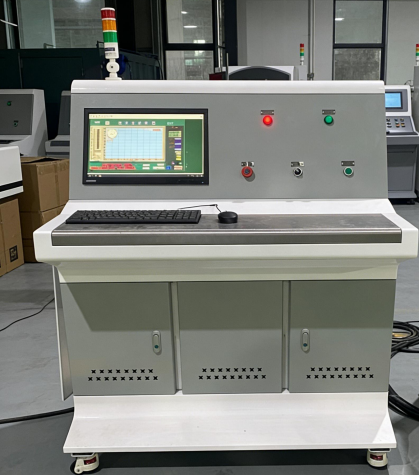


The G650 Mercury Intrusion Porosimeter is designed to measure pore size distribution and pore volume in porous solid materials using the mercury intrusion method. It applies controlled high pressure to force mercury into accessible pores and determines pore characteristics based on the relationship between applied pressure and the volume of mercury intruded.
The equipment features a servo booster pump for high-pressure generation and computer-controlled pressure adjustment. Its test fluid system is separated from the driving fluid system, and the pipeline uses non-welded connections for convenient assembly and maintenance.
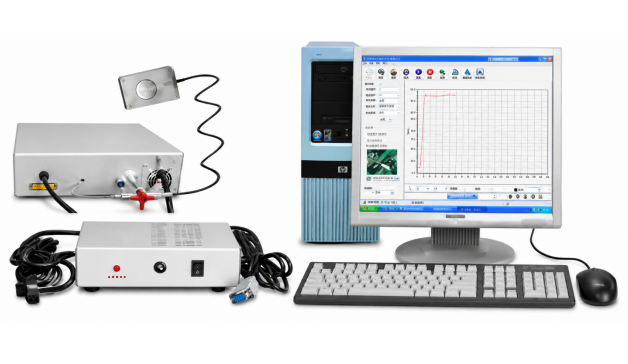
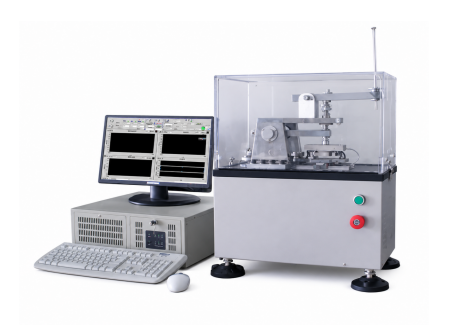
The computer-controlled system supports multi-stage pressure settings, automatic pressure holding, real-time pressure curve display, and test report generation. Test data can be stored and exported in Excel format.
With a maximum test pressure of 60,000 psi and a specified pore diameter range of 30 nm to 126 μm, the G650 is suitable for pore structure characterization of porous materials in laboratory and industrial research applications.
Application
Pore size distribution analysis of porous solid materials.
Pore volume measurement and characterization.
Pore structure evaluation of catalyst materials.
Porosity analysis of ceramic and powder materials.
Pore characterization of building and construction materials.
Pore structure research on geological and other porous samples.
Comparative evaluation of pore characteristics between material samples.
Standards
GB/T 21650.1-2026 — Evaluation of pore size distribution and porosity of solid materials by mercury porosimetry and gas adsorption — Part 1: Mercury porosimetry
ISO 15901-1:2016 — Evaluation of pore size distribution and porosity of solid materials by mercury porosimetry and gas adsorption — Part 1: Mercury porosimetry
Parameters
Main Technical Specifications
| Parameter | Specification |
|---|---|
| Product Name | Mercury Intrusion Porosimeter |
| Model | G650 |
| Test Principle | Mercury intrusion porosimetry |
| Test Medium | Mercury |
| Maximum Test Pressure | 60,000 psi |
| Pressure Control Accuracy | 0.2% FS |
| Pressure Display Accuracy | 0.1 MPa |
| Static Pressure Head | ≤20 mmHg |
| Ultimate Vacuum Level | 0.05 Pa |
| Pore Diameter Range | 30 nm–126 μm |
| Pore Volume Range | 0.3–3.5 mL |
| Test Channel | 1 channel |
| Pressure Control Method | Computer control |
| Test Sample Installation | Threaded connection |
| Time Display | Computer display |
| Pressure Curve Display | Real-time display through data acquisition software |
| Test Data Storage | Test reports and Excel spreadsheets |
| Report Output | Chinese and English reports |
| Ambient Temperature | Room temperature |
Sample Chamber
| Parameter | Specification |
|---|---|
| Sample Chamber Dimensions | Ø25 mm × 30 mm (length) |
| Installation Method | Threaded connection |
| Number of Test Channels | 1 |
Features
Servo Booster Pump: The core pressurization unit uses a servo booster pump to provide high-pressure output with flexible pressure adjustment and control.
Separated Fluid Systems: The test fluid system is separated from the driving fluid system, allowing the test medium and driving medium to be managed independently. Mercury is the specified test medium for this configuration.
Non-Welded Pipeline Connections: Pressure-bearing components use non-welded connections, making disassembly and maintenance more convenient.
High-Pressure Components: Pressure-bearing components use standard components from established suppliers to support reliable operation under high-pressure conditions.
Computer-Controlled Pressurization: The pressurization process is controlled by computer, with real-time display of pressure curves.
Multi-Stage Pressure Settings: Users can configure different pressure levels and pressure-holding times for individual test stages.
Automatic Pressure Control: The system can automatically stop pressurization when a preset pressure is reached at each stage.
Automatic Pressure-Holding Timing: During multi-stage pressure-holding tests, the software counts down the holding time and provides an alert when the set time expires.
Real-Time Data Acquisition: Pressure data can be collected and displayed during testing through the data acquisition software.
Test Reports and Data Export: After testing, users can generate Chinese or English reports and save test data in Excel format.
Configuration Storage: The software supports saving and restoring test settings for repeat testing.
Compact Equipment Structure: The equipment adopts a compact structural design to facilitate installation and routine maintenance.
Accessories
| No. | Description | Unit | Quantity | Remarks |
|---|---|---|---|---|
| 1 | Servo Booster Pump | Unit | 1 | |
| 2 | Vacuum Pump | Piece | 1 | For vacuum extraction |
| 3 | Cabinet | Piece | 1 | Powder-coated cabinet |
| 4 | High-Pressure Relief Valve | Piece | 1 | High-pressure valve |
| 5 | Pressure Sensor | Piece | 1 | Gefran, for pressure data acquisition |
| 6 | Digital Display Meter | Piece | 1 | For pressure display |
| 7 | Computer | Piece | 1 | Lenovo computer |
| 8 | Data Acquisition Software | Set | 1 | |
| 9 | Sample Chamber | Piece | 1 | Ø25 mm × 30 mm |
| 10 | Check Valve | Piece | 1 |
Leave Message Get Price