Car Camera Sealing Tester
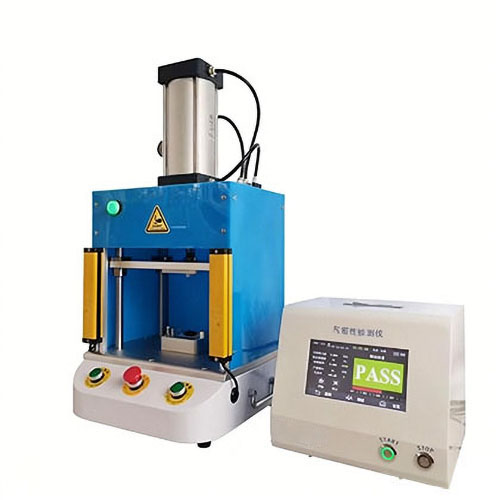


The Car Camera Sealing Tester is a precision air tightness testing system developed for sealing performance verification of automotive camera modules. It evaluates enclosure integrity by simulating pressure changes and monitoring micro-level leakage, helping manufacturers ensure consistent product quality.
Designed for modern automotive electronics production, the system supports pressure decay and differential pressure methods to assess waterproof and dustproof performance in accordance with IP67/IP68 protection requirements. It is suitable for high-throughput environments where reliability, repeatability, and traceability are essential.
Application
(1) Sealing and air tightness testing of automotive cameras
(2) Front-view, rear-view, surround-view, and ADAS camera modules
(3) Production line quality inspection and incoming material verification
(4) Final product validation for waterproof and dustproof performance
(5) Reliability testing under simulated rain, dust, vibration, and temperature conditions
Standards
(1) IEC 60529 – IP Code protection classification
(2) ISO 20653 – Road vehicle environmental protection standards
(3) GB/T 4208 – Enclosure protection classification
(4) IP67 – Protection against temporary immersion (1 meter, 30 minutes)
(5) IP68 – Protection against continuous immersion under defined conditions
Parameters
| Parameter | Specification |
|---|---|
| Test Method | Pressure decay / Differential pressure |
| Test Pressure Range | 60–500 kPa (customizable) |
| Leak Detection Resolution | Up to 0.1 Pa (differential mode) |
| Test Cycle Time | 8–30 seconds per unit |
| Test Medium | Clean dry compressed air |
| Control System | PLC + touchscreen interface |
| Fixture Type | Customized sealing chamber |
| Data Output | USB / system export |
Features
(1) High-speed testing suitable for automated production lines
(2) Dual testing modes: pressure decay and differential pressure
(3) High sensitivity for detecting micro-leakage
(4) Customizable fixtures for various camera structures
(5) Stable operation for continuous industrial use
(6) Automatic pass/fail (OK/NG) evaluation
(7) Short cycle time to support manufacturing efficiency
(8) Designed for IP67/IP68 sealing performance verification
Maintenance Information
(1) Perform regular calibration of pressure sensors
(2) Inspect fixtures for wear, deformation, or sealing degradation
(3) Maintain a clean and dry compressed air supply
(4) Check pipelines, valves, and connectors for leakage
(5) Conduct periodic software updates and diagnostics
Conclusion
The Car Camera Sealing Tester provides a stable and efficient solution for verifying the sealing performance of automotive camera systems. With precise leak detection, flexible testing methods, and compatibility with production environments, it supports quality assurance requirements in automotive electronics and contributes to reliable camera operation in real-world conditions.
FAQ
(1) How does the tester verify IP67/IP68 compliance?
The system simulates pressure conditions equivalent to water and dust exposure, then evaluates leakage based on pressure decay or differential changes. This allows indirect verification of sealing performance aligned with IP67/IP68 requirements.
(2) What types of automotive cameras can be tested?
It is suitable for front-view, rear-view, surround-view, and ADAS camera modules, including integrated sensor housings and lens assemblies.
(3) Can this equipment be used in automated production lines?
Yes. The tester supports PLC control, fast cycle times, and data export, making it suitable for integration into automated manufacturing and quality inspection systems.
(4) Why is sealing performance critical for automotive cameras?
Poor sealing can allow moisture or dust ingress, which may affect image clarity, electronic stability, and long-term reliability—impacting driving safety and system performance.
(5) What factors influence leak test accuracy?
Key factors include fixture sealing quality, sensor calibration, air source stability, and proper parameter settings such as pressure level and test duration. Regular maintenance helps maintain consistent accuracy.
Leave Message Get Price