Impulse Current Test System
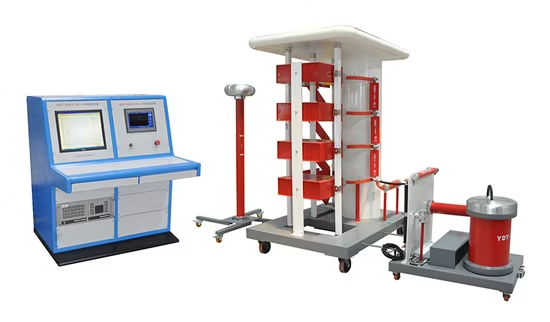


An Impulse Current Test System (Impulse Current Generator) is an electrical testing device specially designed to simulate transient high-energy overcurrent phenomena such as lightning strikes, large equipment switching operations, or power grid faults. It is mainly used to evaluate the insulation performance, residual voltage characteristics, and damage resistance capability of electrical equipment and components when subjected to high-current impulses.
Applications
The Impulse Current Test System provides an effective solution for evaluating electrical equipment performance under high-energy transient current conditions. With accurate impulse waveform generation, high-current output capability, and compliance with IEC high-voltage testing standards, it is suitable for MOA testing, lightning protection evaluation, and electrical equipment reliability research in power industries.
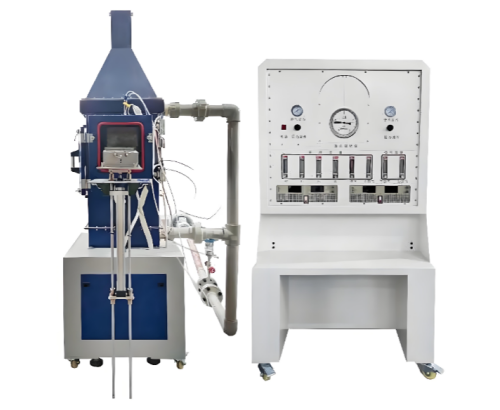
ICTS MOA 8/20&4/10 Impulse Current Test System can output 8/20μs standard lightning current and 4/10μs high current wave. The test system is used to carry Residual Voltage Test for MOA of 110kV power system and below.
Standards
IEC60099-4.
IEC60060
Technical Parameters
| Impulse Current | Waveform Parameters | ||
| Front Time | Duration Time | Peak | |
| 8/20 | 8μs + 10% | 20μs ± 10% | 40kA ± 10% |
| 4/10 | 4μs + 10% | 10μs ± 10% | 100kA ± 10% |
| Tested MOA | MOA for 10kV, 35kV, 110kV power system | ||
Features
(1) Provides high-energy impulse current output for transient overcurrent simulation.
(2) Supports standard 8/20μs lightning current and 4/10μs high current waveform generation.
(3) Suitable for residual voltage testing of medium and high-voltage metal oxide arresters.
(4) Uses optimized circuit design to reduce stray inductance and improve waveform accuracy.
(5) Supports high peak current output for demanding electrical safety evaluations.
(6) Multi-stage discharge structure provides stable instantaneous energy release.
(7) Designed according to international high-voltage testing requirements.
(8) Suitable for power utilities, research institutions, and electrical equipment manufacturers.
FAQ
1. What are the main application fields of an Impulse Current Test System?
This system is mainly used to evaluate the insulation integrity and high-current impulse withstand capability of power transmission, power distribution, and electronic electrical equipment. Typical test objects include surge arresters, surge protective devices (SPDs), transformer windings, grounding devices, cables, and various types of high-voltage switchgear.
2. What standard waveforms can the system generate?
According to different international standards, the system can generate various typical current waveforms:
Exponential waveforms (such as 8/20 μs or 10/350 μs): used to simulate lightning surge currents.
Rectangular wave currents (such as 2 ms rectangular waves or long-duration current waveforms): used to simulate long-duration system transient processes.
3. How does an impulse current generator produce extremely large currents?
Its basic operating principle is to use a high-voltage charging device to charge a bank of high-voltage capacitors, and then instantaneously discharge the stored energy through a special triggering switch (such as a discharge gap or thyristor switch). Through specifically designed resistors and inductors (wave-shaping circuits), the enormous energy is concentrated and released onto the test specimen.
4. How are extremely large currents and voltages accurately measured during testing?
To prevent high voltage and large current from damaging measuring instruments while ensuring measurement accuracy, the system is equipped with dedicated shunts or Rogowski coils for current signal acquisition, as well as non-inductive voltage dividers for residual voltage measurement. These signals are transmitted to digital transient recorders with strong electromagnetic interference (EMI) immunity, such as oscilloscopes or transient recording systems specifically designed for high-voltage testing.
5. How is it determined whether the tested equipment has passed the impulse test?
Engineers compare the condition and electrical characteristics of the equipment before and after testing. The evaluation criteria generally include:
Visual Inspection: No burning, cracking, explosion, or obvious physical damage on the sample surface.
Electrical Parameter Comparison: Whether changes in varistor voltage (for MOV devices), leakage current, or insulation resistance before and after the impulse application remain within the allowable tolerance range.
Waveform Analysis: Comparison between the theoretical standard waveform specified by the standard and the actual recorded voltage and current waveforms to determine whether abnormal waveform distortion has occurred.
6. How can I select a suitable impulse current test system?
Selection should consider required peak current, waveform type, tested equipment voltage level, applicable standards, and laboratory safety conditions. For customized solutions, technical support, and application cases, please contact our engineers for professional guidance.
Leave Message Get Price