Precision Constant Temperature Oven
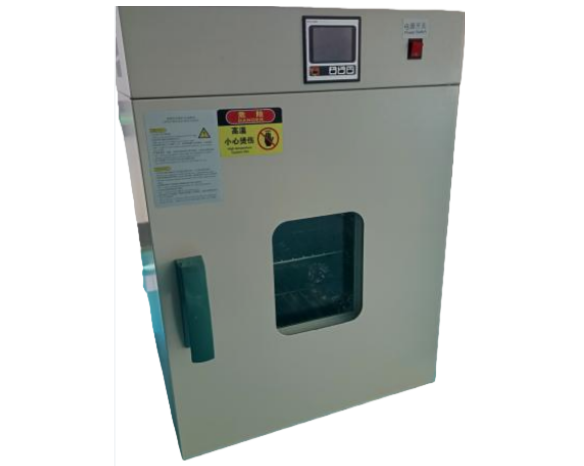


The Precision Constant Temperature Oven provides stable and uniform heating for drying, baking, heat treatment, and constant-temperature testing of various materials and components. Its forced air circulation system ensures consistent temperature distribution within the chamber, delivering reliable thermal performance for laboratory and industrial applications.
Application
The oven is suitable for controlled heating and aging tests in multiple industries, including:
(1) Electronics and electrical components (PCBs, connectors, cables)
(2) Plastics and polymers (thermoplastic and thermoset material testing)
(3) Metals and alloys (pre-heat treatment, aging tests)
(4) Leather and textile materials (drying, performance evaluation)
(5) Laboratory research and quality control of raw materials and finished products
(6) Industrial production processes requiring precise temperature control
Standards
The oven is designed in compliance with the following standards:
(1) IEC 61010-1 – Safety requirements for electrical equipment for measurement, control, and laboratory use
(2) IEC 60519-1 – Safety in electroheat installations: General requirements
(3) ISO 9001 – Quality management systems (design and manufacturing reference)
(4) ASTM E145 – Specification for gravity-convection and forced-ventilation ovens
(5) ASTM E1077 – Standard guide for full-scale laboratory ovens and furnaces
(6) DIN 12880 – Laboratory ovens and heating cabinets (temperature uniformity and safety requirements)
(7) EN 61010-1 – European safety standard for laboratory electrical equipment
(8) GB/T 11158 – High-temperature test chambers (general technical requirements)
Features
Precision Temperature Control: PID-based microcomputer controller with PV/SV display, ±1°C control accuracy, and 0.1°C resolution.
Uniform Heating: Dual air-duct circulation with forced horizontal airflow ensures consistent temperature distribution.
Rapid Heating: Stainless steel heating elements with 1.5 kW total power; ambient to 100°C in approximately 15 minutes.
Robust Construction: Mirror-finished stainless steel inner chamber with argon-welded overlapping structure; A3 steel outer housing with double-layer cabinet and environmentally friendly paint.
Safety Protection: Over-temperature protection, leakage current protection, instrument upper temperature limit lock, and control circuit short-circuit safeguard.
User-Friendly Operation: Programmable temperature controller, intelligent timer, LCD display, and multi-step operation support.
Mobility: Four universal casters (two with brakes) for easy relocation.
Parameters
| Parameter | Specification |
|---|---|
| Overall Dimensions (W × D × H) | 840 × 530 × 730 mm |
| Chamber Dimensions (W × D × H) | 550 × 350 × 550 mm |
| Power Supply | 1L + N + PE / 220 V / 50 Hz |
| Temperature Range | RT +10°C to 200°C |
| Temperature Control Accuracy | ±1.0°C |
| Temperature Resolution | 0.1°C |
| Heating Rate | Ambient to 100°C ≈ 15 minutes |
| Heating Power | 1.5 kW |
| Circulation Fan Speed | 1,450 r/min |
| Air Inlet / Exhaust | Φ30 mm / Φ30 mm |
| Door Type | Single door, left or right opening |
| Door Seal | High-temperature silicone rubber, compression type |
| Casters | 4 sets, 2 with brake |
| Inner Chamber Material | SUS#304 stainless steel |
| Outer Chamber Material | A3 steel plate with baked paint finish |
Accessories
(1) User manual and instrument instruction guide
(2) Product certificate of conformity
(3) After-sales service commitment
(4) Timer and temperature controller manuals
(5) Installation and maintenance instructions
Test Procedures
Place specimens on the chamber tray and close the door securely.
Set the desired temperature and duration using the programmable controller.
Activate the circulation fan for uniform airflow.
Monitor temperature and operation status via the LCD display.
Upon test completion, allow the chamber to cool before removing specimens.
Record temperature profiles and specimen conditions for documentation.
Maintenance Information
Regularly inspect heating elements, fan, and electrical connections for wear or damage.
Clean inner chamber surfaces to prevent residue accumulation.
Verify the calibration of temperature sensors and PID controller every six months.
Check door seals for integrity to maintain uniform temperature distribution.
Ensure casters and brakes are functional for safe relocation of the oven.
Leave Message Get Price