Scratch tester (KK01,KK02,KK03)
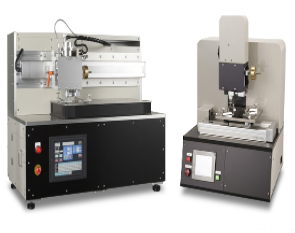


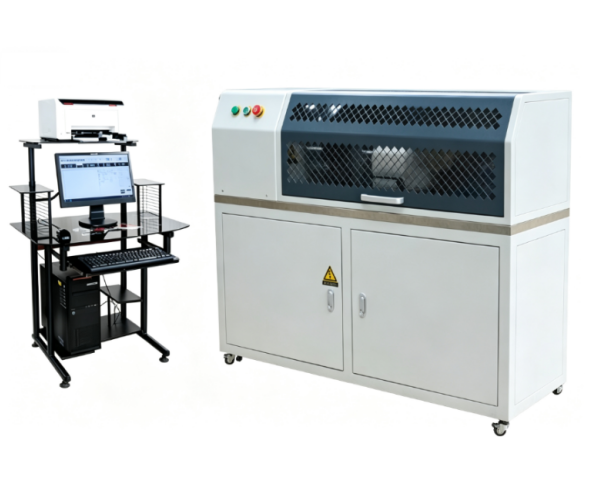
The Scratch Resistance Tester (KK01 / KK02 / KK03) is designed to evaluate the scratch resistance of plastics, films, coatings, and automotive interior and exterior materials. By applying a vertically loaded scratch stylus and moving it horizontally across the sample surface, you can quantitatively assess scratch characteristics. This helps you understand surface durability, optimize material selection, and improve product appearance and service life.
Application
You can use this tester for the following applications and test materials:
Scratch resistance evaluation of plastic molded products
Scratch property testing of film materials
Surface scratch performance assessment of coatings, paints, and sprayed materials
Scratch resistance testing of automotive interior and exterior components
Scratch durability testing of optical materials, packaging materials, and electronic housings
Scratch damage analysis during material research, development, and quality control
Standards
The tester complies with the following international standards:
ISO 19252 — Plastics — Determination of scratch resistance of plastics and coated plastics by progressive load test
ASTM D7027-05 — Standard Test Method for Instrumented Indentation Test for Plastics (Scratch Resistance Test)
Parameters
| Parameter | KK-01 | KK-02 | KK-03 |
|---|---|---|---|
| Dimensions (mm) | W965 × D530 × H690 | W545 × D455 × H680 | W545 × D455 × H680 |
| Weight | 150 kg | 65 kg | 150 kg |
| Power supply | AC 100 V | AC 100 V | AC 100 V |
| Maximum power consumption | 60 W | 60 W | 60 W |
| Operating environment | 10–40 ℃, 30–70 %RH, non-condensing | Same as left | Same as left |
| Test method | Progressive load method | Progressive load method | Progressive load method |
| Scratch direction | Left → Right | Left → Right | Left → Right |
| Vertical load range | 1–200 N | 1–50 N | 0.1–5 N |
| Horizontal load | Max. 200 N | 50 N | 5 N |
| Scratch distance | Max. 400 mm | Max. 400 mm | Max. 400 mm |
| Scratch speed | 1–400 mm/s | 1–200 mm/s | 1–200 mm/s |
| Scratch depth detection | Laser displacement sensor | Laser displacement sensor | Laser displacement sensor |
| Sample size | 200 × 420 mm, thickness ≤ 5 mm | Same as left | Same as left |
Features
Vertical load scratch testing
You can perform quantitative scratch evaluation in compliance with ISO and ASTM standards.
Touchscreen operation
All test parameters and functions are easily set and controlled through the touchscreen interface.
Teaching function
You can precisely define the load application area to ensure high repeatability of test results.
Testing of uneven surfaces
The suspension mechanism ensures linear vertical load application, allowing reliable testing even on uneven sample surfaces.
Test condition memory
You can store up to 20 sets of test conditions for repeated and comparative testing.
Multiple stylus options
A standard Φ1 mm stylus and optional customized styli allow evaluation of different scratch modes such as gloss scratches, scale scratches, and cutting scratches.
Convenient data output
Test results can be transferred via USB, with storage capacity of approximately 1,000 data records.
Accessories
(1) Standard scratch stylus Φ1 mm (for ISO/ASTM standard testing)
(2) Optional scratch styli (gloss scratch, scale scratch, cutting scratch, etc.)
(3) Safety cover (optional, for operator protection)
(4) USB connection cable
(5) Software and user manual
Test Procedures
Fix the sample securely on the test stage and ensure it is flat and stable.
Select the test mode and set vertical load, scratch speed, and scratch distance via the touchscreen.
Use the teaching function to calibrate the load area and scratch starting position if required.
Start the test. The stylus applies vertical load and moves horizontally while data are recorded in real time.
After the test, save the data and proceed with result analysis.
FAQ
1. What is this product?
This product is a scratch resistance tester used to quantitatively evaluate the scratch performance of material surfaces.
2. What is this product used for?
You use it to measure scratch resistance and surface damage behavior of plastics, films, coatings, and automotive materials.
3. How does this product work?
A vertically loaded stylus moves horizontally across the sample surface while load, distance, speed, and scratch depth are measured to evaluate scratch characteristics.
4. Why is this product important?
It helps you understand surface durability, optimize materials, improve product appearance, and ensure consistent quality.
5. What industries is this product suitable for?
It is suitable for plastics, coatings, automotive manufacturing, electronics, packaging, optical materials, research institutions, and quality inspection laboratories.
Leave Message Get Price