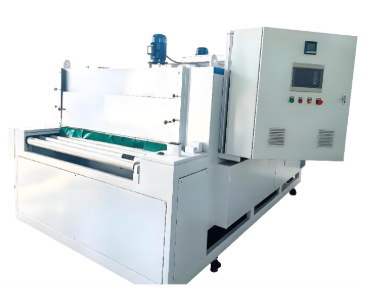
HEPA Filter Element Quality Control Test System
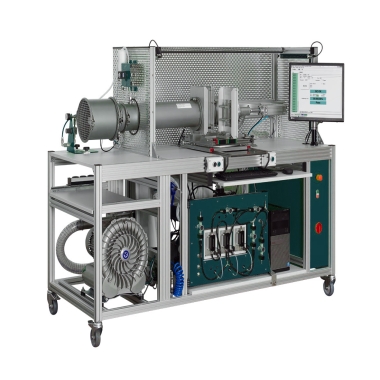


The HEPA Filter Element Quality Control Test System is designed for quality control of small HEPA filter elements during production. It enables rapid and reliable determination of integral filtration efficiency for particle sizes from 0.3 µm to 0.5 µm, in accordance with EN 1822-4 and ISO 29463-4, Appendix E. The system is ideal for filter elements that cannot be scanned due to geometrical constraints, providing precise pass/fail evaluation for production control.
Application
(1) Efficiency testing of small HEPA filter elements used in cleanrooms and laboratory environments.
(2) Confirmation of nominal HEPA filter class for industrial, pharmaceutical, and semiconductor applications.
(3) Quality control for integrated filter production lines, ensuring consistent performance of high-efficiency filter media.
(4) Verification of filtration efficiency for HEPA filter elements in HVAC systems, medical devices, and air purifiers.
Standards
(1) EN 1822-3 — High-efficiency air filters (HEPA and ULPA) – Classification and test methods.
(2) EN 1822-4 — High-efficiency air filters – Efficiency and leakage testing.
(3) ISO 29463-3 — High-efficiency air filters – Test methods.
(4) ISO 29463-4 — High-efficiency air filters – Efficiency and leakage testing, integral method.
Features
(1) Compact design suitable for production environments.
(2) 24/7 operational capability with minimal operator intervention.
(3) Fast test cycle of 30 seconds per filter.
(4) Customizable filter adapters for different small HEPA filter element geometries, easily changeable within 5 minutes.
(5) High degree of automation and fully configurable target filter efficiency.
(6) Reliable and fast efficiency determination compared to traditional oil-thread testing, with reduced aerosol loading on filters.
(7) Upstream and downstream particle concentration measurement with optical particle counters and cascaded self-adjusting dilution systems.
Parameters
| Parameter | Unit | Value |
|---|---|---|
| Test flow rate | m³/h | 25 – 130 |
| Test cycle duration | s | 30 |
| Measuring range, differential pressure | Pa | 0 – 3000 (±1% of final value) |
| Test specimen dimensions | mm | max. 300 × 300 × 300 |
| Power supply | – | 3 × 400 VAC, 50/60 Hz, 16 A |
| Operating medium (aerosol substance) | – | Customer-specific (DEHS, paraffin oil, NaCl, etc.) |
| Particle measurement instruments | – | Particle counter (4 or 8 channels) with vacuum pump |
| Sensors (others) | – | Temperature, relative humidity, air pressure |
| System dimensions (W × H × D) | mm | 2000 × 1500 × 1000 |
| Weight | kg | approx. 600 |
Maintenance Information
(1) Regularly clean the aerosol generator and particle measurement system.
(2) Periodically calibrate particle counters and sensors.
(3) Inspect filter adapters and clamps for wear or deformation.
(4) Maintain compressed air supply and system integrity.
(5) Update and verify software for automated test sequences.
FAQ
(1) What is this product?
– A test system for quality control of small HEPA filter elements, providing rapid and reliable determination of integral filtration efficiency.
(2) What is it used for?
– To verify filtration efficiency and class compliance of small HEPA filter elements during production.
(3) What types of this product exist?
– Configurations for production control of panel filters, cartridge filters, and other small HEPA elements.
(4) What industry problems does it solve?
– Ensures consistent filter quality and nominal class verification, reduces manual testing efforts, and supports high-throughput production lines.
(5) How is it operated?
– Place the filter in the adapter, select test aerosol, configure test parameters, start automated testing, and review pass/fail results in the report.
Leave Message Get Price