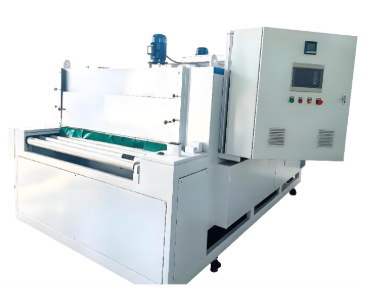
Sulfate Resistance Tester
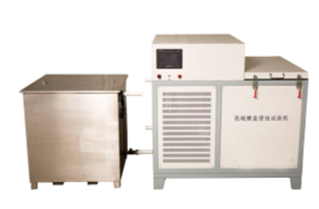


The Sulfate Resistance Tester is designed to evaluate the ability of concrete to withstand sulfate attack under wet-dry cyclic conditions. It is particularly suitable for high-strength concrete and provides precise, quantitative data on material durability. The instrument is essential for quality control, research, and assessment of long-term performance of concrete structures in sulfate-rich environments.
Applications
This tester is widely used in:
Concrete Research & Development:
Testing high-strength and ultra-high-performance concrete mixes for sulfate resistance.
Evaluating the performance of admixtures, supplementary cementitious materials (fly ash, slag, silica fume) against sulfate attack.
Construction Quality Control:
Routine durability assessment of concrete used in bridges, tunnels, dams, and industrial flooring.
Certification of precast concrete products, blocks, slabs, and panels for sulfate-rich environments.
Infrastructure & Industrial Projects:
Testing concrete used in chemical plants, sewage treatment facilities, and marine environments exposed to sulfate salts.
Assessing long-term durability of concrete pipes, culverts, and retaining walls.
Education and Laboratories:
Universities and research institutions for materials science and civil engineering studies.
Testing different curing regimes and mix designs for improved sulfate resistance.
Specialized Materials Testing:
Evaluation of fiber-reinforced concrete, lightweight concrete, insulating concrete, and other innovative cementitious materials.
Assessment of repair mortars and coatings designed to resist sulfate penetration.
Standards
The instrument complies with major international and national standards, ensuring global applicability:
GB/T 50082-2009 — Standard for Testing Long-Term Performance and Durability of Ordinary Concrete
ASTM C1012 — Length Change of Hydraulic-Cement Mortars Exposed to a Sulfate Solution
ASTM C88 — Soundness of Hydraulic Cement (for sulfate resistance assessment)
ISO 1920-7 — Testing of Concrete — Sulfate Resistance of Concrete
BS EN 196-14 — Methods of Testing Cement — Sulfate Resistance of Mortar Specimens
EN 206-1 / EN 206-2 — Concrete Specification, Performance, Production and Conformity (includes durability classes for sulfate exposure)
ACI 318 / ACI 222R — Guidelines for Durability and Sulfate Attack Resistance in Concrete
JIS A 1148 — Testing of Concrete Resistance to Sulfate Attack (Japan)
DIN 1048-5 — Testing of Concrete — Resistance to Chemical Attack (Germany)
These standards ensure that the equipment can be used worldwide for both research and certification purposes.
Technical Parameters
| Item | Specification |
|---|---|
| Specimen Dimensions | 130 × 130 × 460 mm or 100 × 100 × 100 mm |
| Number of Specimens | 18 groups (54 specimens) |
| Temperature Range | 0–100 °C |
| Temperature Measurement Accuracy | ±0.1 °C |
| Temperature Control Accuracy | ±0.5 °C |
| Maximum Temperature Variation in Chamber | ±5 °C |
| Test Solution | 5% Na₂SO₄ (by mass) |
| Dry-Wet Cycle Duration | 24 ± 2 h per cycle |
| Power Supply | AC 220 V, 50 Hz |
Features
Durable Construction: Cabinet with electrostatic powder coating for corrosion resistance and mechanical strength.
Corrosion-Resistant Specimen Racks: 304 stainless steel racks compatible with solution tanks.
Robust Piping System: PPR pipes with high strength, sealing, and corrosion resistance.
Chemical-Resistant Circuits: Flame-retardant, high-strength materials for circulation piping, resistant to oxidizers, reducers, and strong acids.
Stable Cooling System: Imported compressor for rapid and efficient cooling.
Advanced Control System: PID control with auto-tuning; Omron PLC and temperature expansion modules reduce interference.
High-Performance Outputs: Schneider solid-state relays with long life and high reliability.
Liquid Level Monitoring: Upper and lower sensors accurately control solution levels.
Data Acquisition: RS-232 serial communication ensures stable and reliable real-time data acquisition.
Smart Software: Full automation with real-time display, manual override, remote monitoring, and cloud access for global support.
After-Sales Service
(1) Provide professional equipment selection consultation according to testing standards and customer requirements.
(2) Offer installation guidance, operation training, and technical documentation after delivery.
(3) Provide remote technical support for equipment operation and troubleshooting.
(4) Supply original spare parts and long-term maintenance services.
(5) Provide customized solutions for different specimen sizes, test cycles, and laboratory requirements.
FAQ
(1) What is this product?
It is a laboratory instrument for testing concrete resistance to sulfate attack under dry-wet cycles.
(2) What is it used for?
To evaluate the long-term durability and chemical resistance of concrete and related cementitious materials.
(3) Why is it important?
Sulfate attack can severely damage concrete, reducing its lifespan. This tester ensures performance and guides material design.
(4) What products can it test?
Concrete blocks, high-strength concrete specimens, mortar samples, precast panels, repair mortars, and cementitious coatings.
(5) What types are there?
Wet-dry cyclic sulfate resistance testers for various specimen sizes with automated or manual control.
(6) How does it operate?
Specimens are immersed in a 5% Na₂SO₄ solution and subjected to controlled wet-dry cycles. Temperature, solution levels, and cycles are monitored and recorded automatically via PLC and software.
Leave Message Get Price