Wire Guide Pushing Force Tester
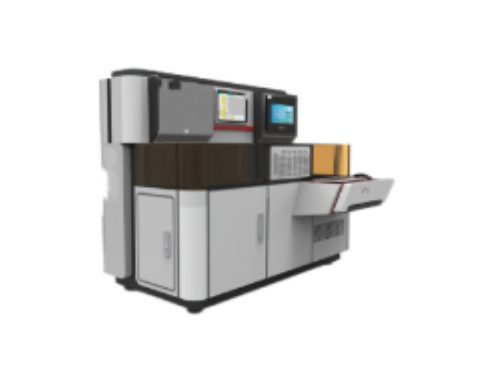


The Wire Guide Pushing Force Tester is designed to evaluate the mechanical properties of medical guidewires during advancement. By simulating pushing operations under controlled conditions, the tester measures force-related performance and helps assess guidewire behavior during movement through a simulated pathway.
The instrument supports medical device research and development, production quality control, and process optimization. Test data can help engineers evaluate guidewire performance, identify potential design issues, and improve product consistency. When connected to a vascular simulator, the system can also support assessment of guidewire advancement under simulated use conditions.
Application
(1) Intravascular guidewires
(2) Medical guidewire research and development
(3) Guidewire pushing force measurement
(4) Guidewire mechanical performance evaluation
(5) Guidewire production quality control
(6) Guidewire design and process optimization
(7) Guidewire advancement testing in simulated vascular pathways
(8) Medical device laboratory testing
Standards
(1) ISO 11070:2014 — Sterile Single-Use Intravascular Introducers, Dilators and Guidewires.
(2) ISO 25539-1:2017 — Cardiovascular Implants — Endovascular Devices — Part 1: Endovascular Prostheses.
(3) YY/T 1898-2024 — Intravascular Catheter and Guidewire — Testing Method for Fastness of the Hydrophilic Coating.
Parameters
| Parameter | Specification |
|---|---|
| Force Measurement Range | Model-dependent; some configurations measure forces of several tens of newtons |
| Force Measurement Accuracy | Model-dependent; the supplied description gives 0.1 N or better as a reference |
| Test Speed | Adjustable; some configurations support 0–500 mm/min |
| Main Components | Test unit, angle sensor, torque sensing system, force sensor, and roller clamping device |
Features
(1) Measures pushing force during guidewire advancement.
(2) Supports testing under different simulated operating conditions.
(3) Provides force measurement for mechanical performance evaluation.
(4) Supports adjustable test speed according to the selected configuration.
(5) Integrates force, torque, and angle sensing components as configured.
(6) Supports guidewire design optimization and manufacturing quality control.
(7) Can be integrated with a vascular simulator for simulated-use testing.
Accessories
(1) Force sensor
(2) Torque sensing system
(3) Angle sensor
(4) Roller clamping device
(5) Optional vascular simulator, subject to system configuration
Maintenance Information
(1) Inspect the force sensor and associated connections regularly for damage or unstable readings.
(2) Check the torque and angle sensing systems according to the manufacturer's maintenance instructions.
(3) Inspect the roller clamping device for wear, looseness, or slippage.
(4) Verify force measurement and test speed periodically according to laboratory quality requirements.
(5) Keep specimen contact surfaces clean and free from contamination.
(6) Follow the manufacturer's instructions for calibration, servicing, and replacement of worn components.
Leave Message Get Price