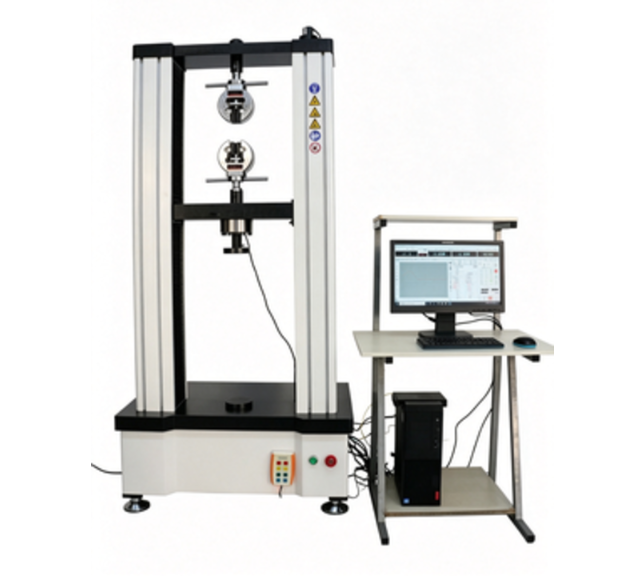
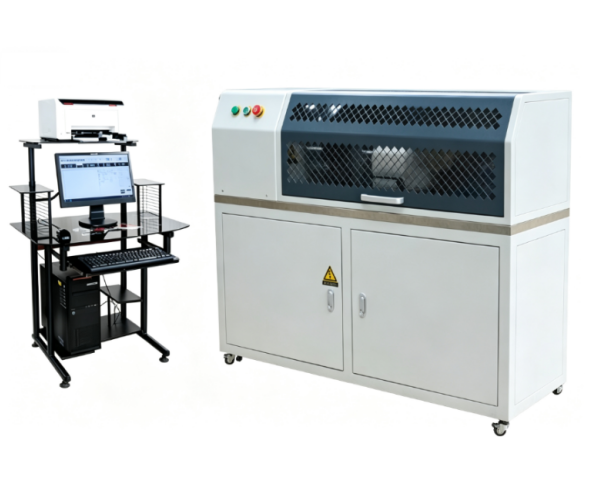
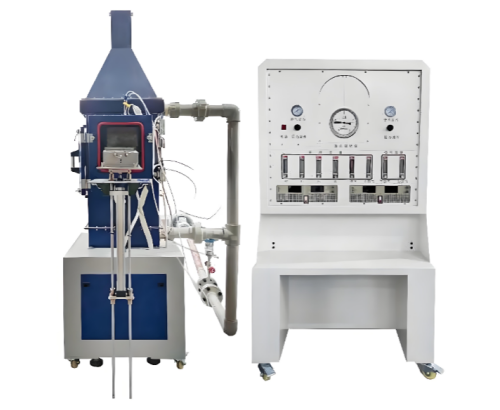
Vacuum Ball - Disk Friction Tester
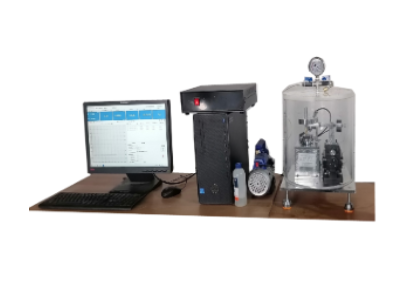


Vacuum Ball - Disk Friction Tester is a precision tribological testing instrument designed to evaluate friction coefficient, wear behavior, and service life of materials under vacuum or controlled atmospheric environments. The tester uses a ball-on-disk contact method to simulate real friction conditions between materials, while controlling parameters such as load, speed, and environmental atmosphere. It is widely used for studying the friction and wear characteristics of metals, ceramics, polymers, coatings, and solid lubricating films in special application environments such as aerospace, vacuum equipment, and advanced material research.
Application
(1) Material Friction Performance Testing: Measures friction coefficient and wear characteristics of materials under different loads, speeds, and environmental conditions.
(2) Wear Life Evaluation: Evaluates material durability by analyzing friction behavior, wear volume, and lubrication failure during long-term testing.
(3) Vacuum Tribology Research: Simulates low-pressure or vacuum environments to study material friction behavior in aerospace, semiconductor equipment, and precision machinery applications.
(4) Atmospheric Environment Simulation: Tests material performance under different gases such as nitrogen, argon, and other controlled atmospheres.
(5) Lubricating Film Performance Testing: Evaluates wear life and failure behavior of solid lubricating coatings and thin-film lubrication materials.
(6) Material Development and Quality Control: Provides experimental data for optimizing material formulation, surface treatment, and coating technologies.
(7) Scientific Research Applications: Suitable for universities, research institutes, and industrial laboratories conducting advanced tribology studies.
Standards
(1) ASTM G99 — Standard Test Method for Wear Testing with a Pin-on-Disk Apparatus
(2) ASTM G133 — Standard Test Method for Linearly Reciprocating Ball-on-Flat Sliding Wear
(3) ASTM G77 — Standard Test Method for Ranking Resistance of Materials to Sliding Wear Using Block-on-Ring Test
(4) ISO 7148 — Plastics and Other Materials — Tribological Testing Methods
(5) ISO 20808 — Fine Ceramics — Determination of Friction and Wear Characteristics
(6) ASTM D5706 — Measurement of Extreme Pressure Properties of Lubricating Greases Using High-Frequency Linear-Oscillation
(7) Relevant vacuum tribology testing specifications and laboratory procedures
Note: Specific test standards depend on the tested material, application field, and environmental requirements.
Parameters
| Parameter | Specification |
|---|---|
| Test Method | Ball-on-disk friction and wear test |
| Testing Environment | Vacuum, controlled atmosphere |
| Applicable Materials | Metals, ceramics, polymers, coatings, lubricating films |
| Friction Contact Type | Point contact |
| Test Parameters | Load, speed, atmosphere, test duration |
| Environmental Gas | Optional gases such as nitrogen, argon |
| Main Evaluation Index | Friction coefficient, wear behavior, wear life |
| Vacuum Testing Function | Supports friction testing under vacuum conditions |
| Lubrication Evaluation | Supports solid lubricating film wear life analysis |
FAQ
(1) What materials can be tested using a vacuum ball-disk friction tester?
The tester is suitable for metals, ceramics, polymers, coatings, and solid lubricating films. It evaluates their friction coefficient, wear behavior, and durability under vacuum or controlled atmospheric conditions.
(2) Why perform friction testing under vacuum conditions?
Vacuum environments can significantly affect lubrication and material wear behavior. Vacuum friction testing helps simulate special applications such as spacecraft mechanisms, semiconductor equipment, and precision vacuum systems.
(3) What data can be obtained from the test?
The system can provide key tribological data including friction coefficient changes, wear behavior, lubrication failure points, and material wear life, supporting material optimization and reliability evaluation.
(4) Which standards are commonly referenced for ball-on-disk friction testing?
Common references include ASTM G99, ASTM G133, ASTM G77, ISO 7148, and other tribological testing methods. The selected standard depends on material type and application requirements.
(5) How can I select a suitable vacuum friction tester?
Selection should consider required vacuum level, testing atmosphere, load range, rotation speed, sample type, and applicable standards. QINSUN instruments are calibrated and tested before shipment to ensure data accuracy. For customized solutions, technical support, and application cases, please contact engineers for professional guidance.
Leave Message Get Price