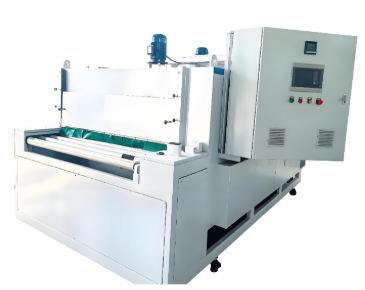
Helmet Straps Tensile Testing Machine
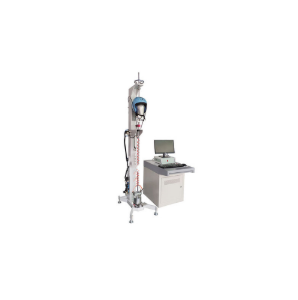


The Helmet Straps Tensile Testing Machine is designed to evaluate the strength and dynamic load resistance of helmet retention systems. It applies controlled loading and impact conditions to assess strap elongation, force response, and retention performance. Equipped with a pneumatic lifting system, electromagnetic release mechanism, force sensor, laser displacement sensor, and dedicated testing software, the machine supports repeatable laboratory testing and quality control for helmet manufacturers.
The equipment is intended for laboratories and manufacturers that need to assess helmet strap performance according to specified test methods and product requirements.

Application
The Helmet Straps Tensile Testing Machine is suitable for evaluating the mechanical strength and retention performance of helmet straps and fastening systems.
Typical applications include:
(1) Motorcycle helmet retention straps.
(2) Bicycle helmet chin straps and fastening systems.
(3) Skateboard and roller-skating helmet retention systems.
(4) Helmet strap assemblies used in product development and quality inspection.
(5) Evaluation of strap elongation and dynamic response under specified loading conditions.
(6) Laboratory testing and quality control during helmet manufacturing.
The test configuration should be selected according to the intended helmet type and applicable standard. Static tensile testing and dynamic retention testing are different procedures and should not be treated as interchangeable.
Standards
(1) UN Regulation No. 22, 05 series (ECE R22.05) — Requirements for protective helmets and their visors for drivers and passengers of motorcycles and mopeds, including retention-system testing. The applicability of this earlier series should be confirmed for the intended market and test program.
(2) ISO 10256-6 — This reference was provided in the original specifications, but the exact standard designation could not be verified. The applicable ISO 10256 standards cover protective equipment for use in ice hockey; the correct part should be confirmed before publication.
(3) EN 1078:2012+A1:2012 — Helmets for pedal cyclists and users of skateboards and roller skates. The standard includes requirements and test methods for retention systems, including chin straps and fastening devices.
Important: The standards listed above do not automatically establish full compliance of the machine with every test requirement. Buyers should confirm the applicable edition, test method, loading conditions, fixtures, and acceptance criteria before placing an order.
Parameters
| Parameter | Specification |
|---|---|
| Product Name | Helmet Straps Tensile Testing Machine |
| Software | HT-6018-A Control Suite |
| Impact Mass | 10.0 kg |
| Free-Fall Height | 750 mm |
| Drop Height Accuracy | ±1 mm |
| Initial Load | 0–15 kg, pneumatically adjustable |
| Initial Load Resolution | 0.1 kg |
| Force Sensor Capacity | 500 N |
| Force Measurement Accuracy | ±0.5% |
| Displacement Sensor | Laser displacement sensor |
| Displacement Resolution | 0.01 mm |
| Displacement Measurement Range | 200 mm |
| Data Acquisition Rate | 1 kHz |
| Overload Protection Threshold | 1,500 N, as specified; compatibility with the 500 N load cell requires confirmation |
| Power Supply | 220 V, 50 Hz |
| Power Consumption | 1.2 kW |
| Dimensions | 1,200 × 800 × 2,200 mm (L × W × H) |
| Net Weight | 180 kg |
| Weight with Accessories | 200 kg |
Technical verification required: The supplied information states an impact mass of 10 kg, a free-fall height of 750 mm, and impact energy of 44.1 J. These figures are inconsistent: a 10 kg mass falling 750 mm has a theoretical gravitational potential energy of approximately 73.6 J. The correct impact mass, drop height, and energy rating should be confirmed by the manufacturer before publication.

Features
(1) Controlled Impact Loading: A pneumatic lifting system raises the 10 kg impact mass to the specified drop height.
(2) Electromagnetic Release: Provides controlled release of the impact mass for repeatable dynamic testing.
(3) Adjustable Initial Load: Pneumatic loading allows adjustment of the initial load from 0–15 kg.
(4) Force Measurement: A 500 N load cell measures force during testing, with a stated accuracy of ±0.5%.
(5) Displacement Measurement: A laser displacement sensor records strap elongation with 0.01 mm resolution.
(6) Real-Time Data Acquisition: The system records force data at a stated sampling rate of 1 kHz.
(7) Automated Analysis: HT-6018-A software calculates peak force, elongation, and energy absorption according to the supported test configuration.
(8) Data Management: The software supports batch testing and storage of more than 10,000 tests, as specified.
(9) Test Reporting: Results can be exported in Word, Excel, PDF, and JPG formats, with pass/fail indicators where the applicable criteria are configured.
(10) Safety Protection: The equipment includes an interlocked enclosure and an emergency stop. The stated Category 3 safety rating and automatic retraction function should be verified against the supplied safety documentation.
Accessories
The supplied configuration lists the following accessories and services. Final inclusion should be confirmed in the quotation.
(1) Calibration Kit: NIST-traceable force gauge and laser interferometer, as specified by the supplier.
(2) Strap Clamps: Quick-release hooks designed for strap widths of 10–50 mm.
(3) Software License: HT-6018-A Pro software, described as including lifetime access and cloud connectivity with an API for integration with quality management systems.
(4) Installation and Training: On-site equipment setup by qualified engineers and 16 hours of virtual operator training, as specified.
(5) Documentation: Multilingual user manual and ECE R22.05 compliance guide.
Leave Message Get Price