Helmet Goggles High - speed Pellet Impact Testing Machine
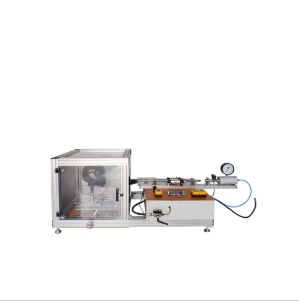


The High-Speed Pellet Impact Testing Machine for Helmet Goggles is designed to evaluate the impact resistance of protective eyewear, including glasses, goggles, and face shields. It uses a high-precision laser speed measurement system to measure the velocity of the launched projectile during impact testing. A silicone headform simulates human head geometry, while the touchscreen control system, safety warning lights, door interlocks, and emergency stop support safe operation. The equipment is intended for laboratory testing, product development, and quality control of protective eyewear.
Application
(1) Protective goggles designed for use with helmets.
(2) Safety glasses used in industrial and occupational environments.
(3) Protective eyewear intended to resist impact from high-speed particles.
(4) Face shields used for personal eye and face protection.
(5) Military protective eyewear requiring ballistic impact evaluation under specified test conditions.
(6) Quality inspection and product development in protective eyewear manufacturing.
The applicable projectile type, impact velocity, specimen mounting method, and acceptance criteria should be selected according to the relevant testing standard and the specific product being evaluated.
Standards
(1) SNELL SA/K2010 — A Snell helmet standard associated with competitive automotive sports and kart racing. Its direct applicability to eyewear impact testing should be confirmed.
(2) EN 166 — Personal eye protection requirements. This is an earlier European standard reference; the applicable current standard should be verified for the intended testing purpose.
(3) EN 168 — Personal eye protection: non-optical test methods. Confirm the relevant test method and edition before use.
(4) ANSI/ISEA Z87.1 — Occupational and educational personal eye and face protection. The applicable edition and specific impact test requirements should be confirmed.
(5) MIL-PRF-32432 — Military Combat Eye Protection (MCEP) system specification, covering requirements for military protective eyewear, including ballistic hazards.
Note: Listing a standard does not establish that the equipment meets every requirement of that standard. The required test configuration and applicable clauses should be confirmed before purchase.
Parameters
| Parameter | Specification |
|---|---|
| Product Name | High-Speed Pellet Impact Testing Machine for Helmet Goggles |
| Test Purpose | Impact resistance testing of glasses, goggles, and face shields |
| Velocity Measurement System | High-precision laser speed measurement and sensing device |
| Control Interface | Touchscreen control |
| Displayed Speed Units | ft/s, m/s, km/s as stated in the source; confirmation required |
| Safety Warning | Equipped with safety warning lights |
| Door Safety Interlock | Dual limit switches installed at the door handle; testing is prevented if the door is not properly closed |
| Headform Material | Silicone |
| Headform Design | Simulates human head geometry, including ears, nose, and mouth |
| Air Compressor Flow Rate | ≥ 500 L/min |
| Air Compressor Pressure | ≥ 0.65; unit requires confirmation |
| Power Supply | AC 220 V, 50 Hz |
| Emergency Stop | Provided on the control panel |
| Speed Display | Digital LCD display showing projectile speed in m/s |
Features
(1) High-precision laser-based projectile velocity measurement.
(2) Touchscreen operation for convenient control.
(3) Multiple selectable speed display units, subject to confirmation of the specified units.
(4) Silicone headform designed to simulate human head geometry.
(5) Door safety interlock with dual limit switches to prevent testing when the door is not properly closed.
(6) Safety warning lights and an emergency stop device.
(7) Digital LCD display for projectile speed monitoring.
Accessories
The original product information does not include a separate accessory list.
(1) Silicone headform, as described in the supplied specifications.
(2) Additional test fixtures, replacement components, and other accessories should be confirmed according to the required test method and equipment configuration.
Maintenance Information
(1) Keep the laser measurement area clean and free from dust or other contamination that may affect optical sensing.
(2) Inspect the door interlocks, safety warning lights, and emergency stop regularly to confirm that they function correctly.
(3) Check the headform and specimen mounting components for wear, deformation, or damage.
(4) Inspect the compressed-air supply and connections for leakage, and operate the equipment within the manufacturer's specified air supply conditions.
(5) Arrange periodic checks of the velocity measurement system and retain relevant calibration and maintenance records.
(6) Disconnect the equipment from the power supply before carrying out maintenance that requires access to internal components. Follow the manufacturer's operating and servicing instructions.
Leave Message Get Price