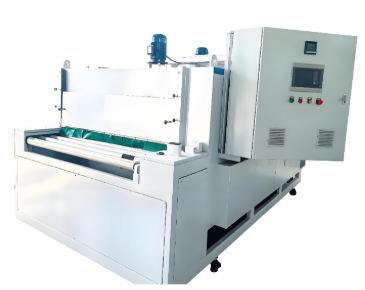
Reciprocating Cylinder Method Dissolution Sampling Collection System



The STD-12P Reciprocating Cylinder Dissolution Sampling System is designed for in vitro drug dissolution and release testing, particularly for modified-release and controlled-release formulations. It combines automated dissolution sampling with a reciprocating-cylinder dissolution tester to support programmed testing under different dissolution media, temperatures, reciprocation rates, and sampling intervals.
The system supports USP Apparatus 3 (reciprocating cylinder) and USP Apparatus 7 (reciprocating holder) test modes, subject to the installed analyzer configuration. The STD-12P automatic sampler integrates sample collection, filtration, and optional dilution, reducing manual handling during extended dissolution studies. It is suitable for pharmaceutical research, formulation development, quality control, and comparative dissolution testing.
Application
(1) Sustained-release and controlled-release tablets
(2) HPMC matrix formulations
(3) Sustained-release pellets and micropellets
(4) Floating drug delivery systems
(5) Microspheres and other controlled-release formulations
(6) Medicated chewing gums, where the applicable method is supported
(7) Comparative dissolution testing of reference and generic formulations
(8) Dissolution profile and pH-dependent drug release studies
(9) Pharmaceutical formulation development and quality control
(10) Automated dissolution sampling and filtration
Standards
(1) USP General Chapter <711> — Dissolution: Covers dissolution testing of pharmaceutical dosage forms and includes Apparatus 3, the reciprocating-cylinder method.
(2) USP General Chapter <724> — Drug Release: Covers drug release testing and includes Apparatus 7, the reciprocating-holder method.
(3) European Pharmacopoeia 2.9.3 — Dissolution Test for Solid Dosage Forms: Includes dissolution testing using Apparatus 3 for applicable prolonged-release dosage forms.
(4) Chinese Pharmacopoeia 2025 Edition: The applicable dissolution and drug-release requirements should be selected according to the relevant general chapter and individual drug monograph.
Note: The original product description refers to compliance with the 2020 edition of the Chinese Pharmacopoeia. The 2025 edition has been effective since October 1, 2025. The supplier should confirm the system's compatibility with the current edition and the specific requirements of the intended test method before making a current compliance claim.
Parameters
Reciprocating-Cylinder Dissolution Analyzer
| Parameter | Specification |
|---|---|
| Associated Analyzer Models | STD-1 / RCWF-1, as referenced in the supplied information; exact model configuration to be confirmed |
| Test Modes | USP Apparatus 3 and Apparatus 7, as specified |
| Water Bath Temperature | Ambient temperature to 45°C |
| Temperature Resolution | 0.1°C |
| Temperature Control Error | ≤ ±0.2°C |
| Reciprocating Stroke — USP Apparatus 3 | 10 ± 0.1 cm |
| Reciprocating Stroke — USP Apparatus 7 | 2 cm |
| Reciprocation Frequency | 1–50 cycles/min |
| Reciprocation Frequency Error | ±5% |
| Dissolution Vessel Volume | 300 mL |
| Sample Position Configuration | 7 cups × 8 rows in single-row configuration, or 14 cups × 4 rows in double-row configuration, as specified |
| Simultaneous Sample Capacity | Up to 14 cups in double-row mode, as specified |
| Running Time | Programmable |
| Immersion Time | Programmable |
| Drain Time | Programmable |
| Heater Power | 1,500 W |
| Ambient Temperature | 5–40°C |
| Relative Humidity | ≤80% |
| Operating Noise | ≤60 dB |
| Power Supply | 220 V, 50 Hz, 10 A |
| Safety Functions | Self-test and automatic protection functions |
STD-12P Automatic Sampling System
| Parameter | Specification |
|---|---|
| Sampler Model | STD-12P |
| Sample Holder | 12 × 16 positions |
| Sampling Volume | 0.1–10 mL; 20 mL for double-row configuration; 30 mL for three-row configuration, as specified |
| Sampling Interval | ≥2 min |
| Sampling Frequency | Programmable; unlimited scheduled sampling times, with 16 samples per batch as specified and manual sample-disk replacement |
| Sampling Consistency Between Channels | RSD ≤1% |
| Sampling Repeatability | RSD ≤1% in the technical indicators; a separate feature claim states RSD <0.5%, which requires confirmation |
| Liquid Flow Rate | Programmable, ≤25 mL/min |
| Typical Sampling and Filtration Time | Within 30 seconds in most cases, as specified |
| Dilution | Direct dilution up to 20 times |
| Channel Configuration | Selectable 12-channel or 8-channel operation |
| Filtration | Pre-filtration and terminal filtration |
| Online Filter Options | 0.45 μm and 0.8 μm filters with Luer connectors |
| Sample Containers | 1.5 mL and 10 mL bottles with sealing caps, or 10 mL test tubes |
| Sampling Needle | Needle with piercing and ejection mechanism; built-in PTFE tubing |
| Syringe Operation | Automatic syringe flipping and programmable venting direction |
| Communication Interfaces | RS-232, RS-485, and network |
| Data Integration | Optional connection to the ADK-1 data integrity platform and LIMS |
Features
(1) Supports automatic sample collection and filtration.
(2) Provides programmable sampling intervals and volumes.
(3) Supports 8-channel and 12-channel operation.
(4) Enables data export and optional LIMS integration.
Leave Message Get Price